
What a Stop Work Order Means When You Get a Code Enforcement Letter in Palm Beach County
Most property owners think code enforcement is just about paperwork. A letter shows up, you file it away, maybe deal with it later. But Palm Beach County doesn't see it that way — and if you don't either, you're setting yourself up for a mess. A stop work order isn't a warning. It's a full stop. And ignoring it doesn't make it go away.

So here's what matters. If you're building, renovating, or making changes to your property, those activities leave a trail. Every permit should be in place. Every inspection needs to happen. And every decision about whether to proceed should be grounded in what the county actually requires — not what you assume is fine.
When the County Shuts You Down
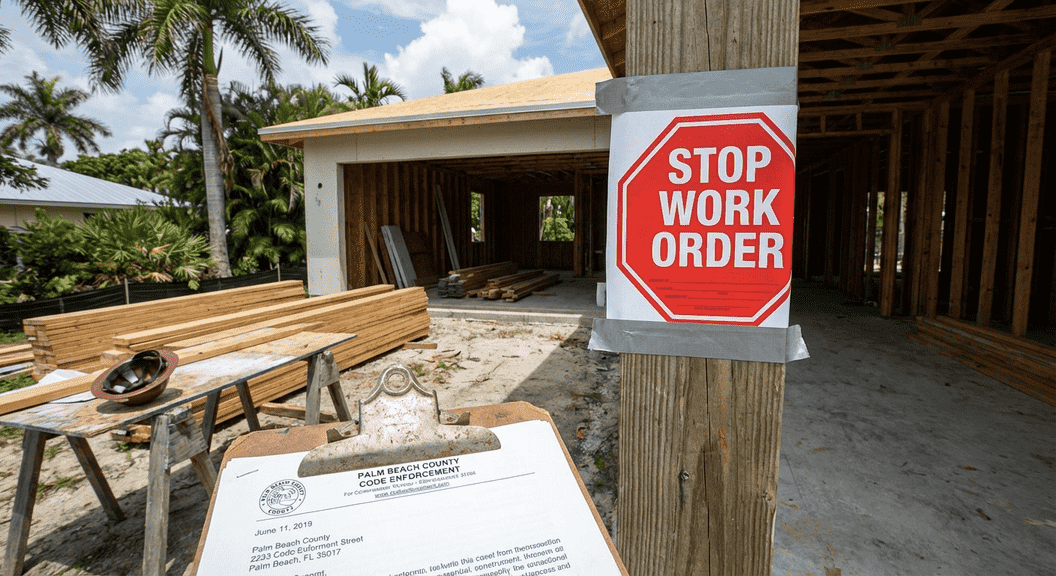
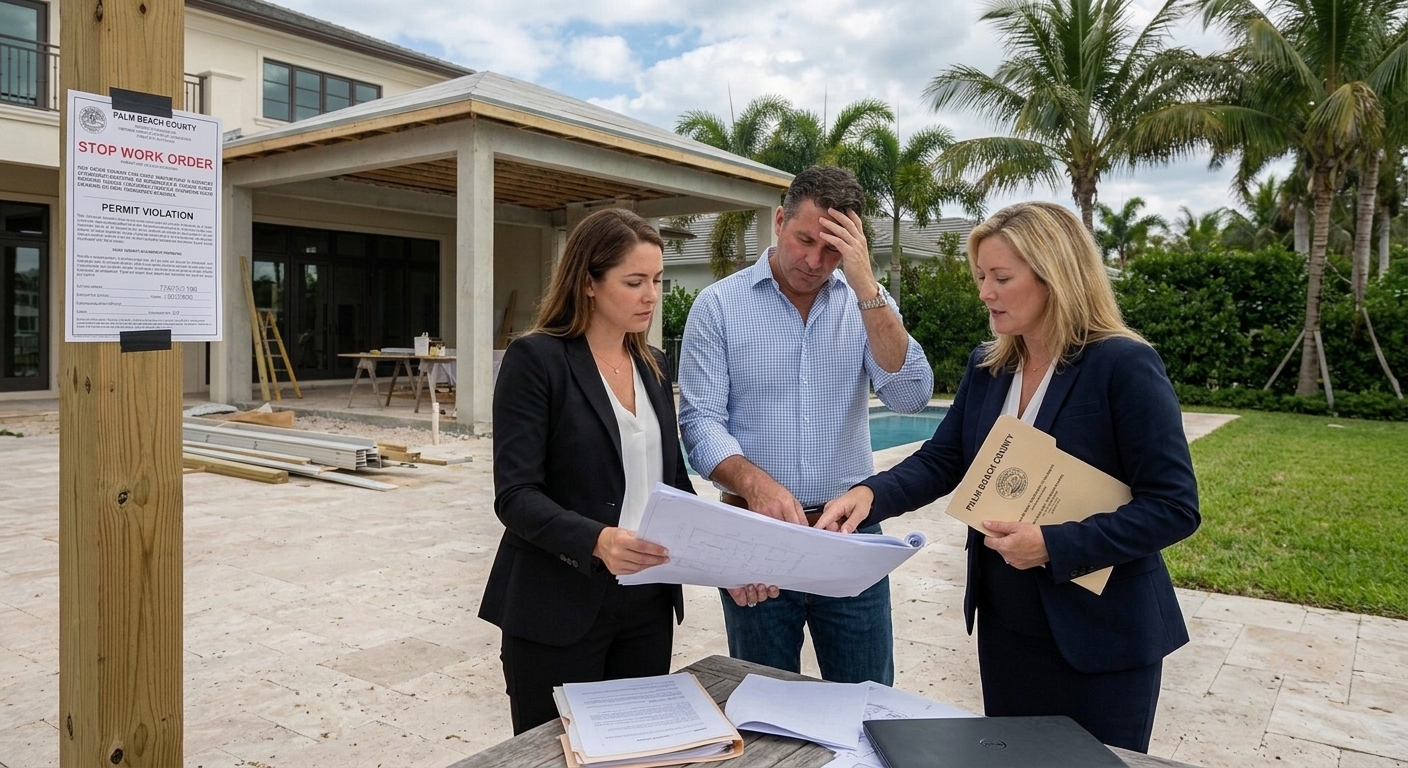
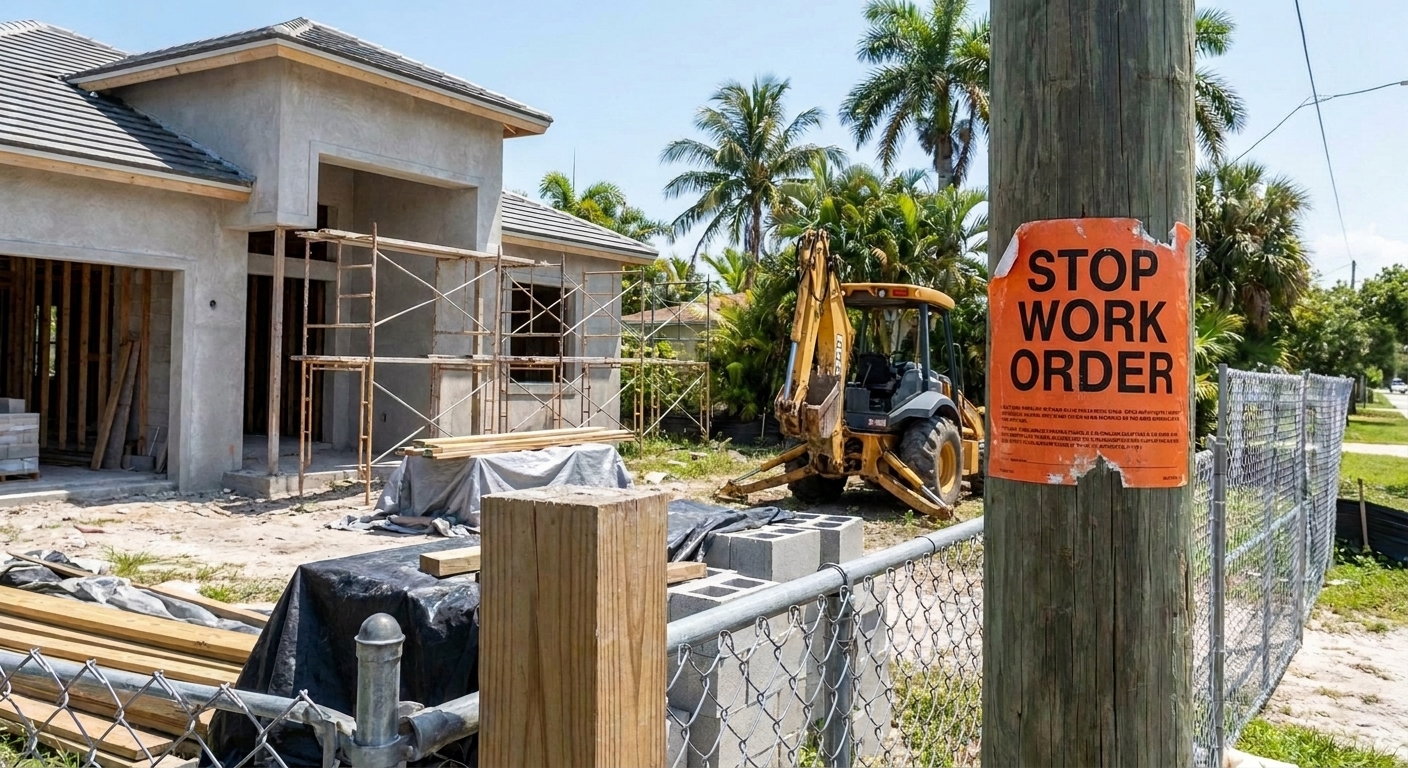
A stop work order is exactly what it sounds like. Palm Beach County issues it when construction or renovation activity violates local codes, permit requirements, or safety standards. The order gets posted on your property, mailed to you, or both. Once it's issued, all work stops. Not slows down. Stops.
This isn't a courtesy reminder. It's a legal directive backed by enforcement power. The county uses these orders to protect public safety, maintain zoning integrity, and ensure that every project meets the standards laid out in local ordinances. If you keep working after receiving one, you're not just bending the rules — you're breaking them, and the penalties stack up fast.
Why Your Project Got Flagged
Stop work orders don't appear out of nowhere. The county has specific triggers, and most of them come down to compliance gaps or safety risks. Here's what usually sets them off:
- Starting work without pulling the required permits — one of the most common violations
- Failing inspections or skipping them entirely during active construction
- Building in ways that don't match approved plans or zoning regulations
- Creating unsafe conditions for workers, neighbors, or the public
- Neighbor complaints that prompt an inspection and reveal code issues
What You're Required to Do Next
Once that order hits, your first move is to read it. Every word. The document will spell out what went wrong and what needs to happen before work can resume. Don't guess. Don't assume you know what they want. The county laid it out — follow it.
Your next step is contact. Reach out to the code enforcement officer or building department listed on the order. They'll clarify the violations, explain the correction process, and tell you what documentation you'll need to submit. And whatever you do, don't touch the project until the order is lifted. Resuming work without clearance is a fast track to fines, legal action, and a much bigger headache.
Fixing the Problem Without Making It Worse
Correcting the violations means doing what the county asked for. That might involve pulling permits you skipped, scheduling inspections you missed, or bringing the work into compliance with building codes. Once you've addressed the issues, request a re-inspection. If everything checks out, the stop work order gets lifted and you're back in business.
Here's what your compliance checklist should include:
- Permit applications submitted and approved for all unpermitted work
- Corrections made to any code violations cited in the order
- Documentation showing how the issues were resolved
- Re-inspection scheduled and passed with the county
- Confirmation in writing that the stop work order has been officially lifted
The Cost of Pretending It Didn't Happen
Ignoring a stop work order isn't just risky — it's expensive. Palm Beach County can impose daily fines that add up quickly. They can take legal action. In extreme cases, they can pursue criminal charges for willful non-compliance. And if you kept building anyway, the county may require you to tear it down and start over.
These aren't scare tactics. They're enforcement tools the county uses to make sure every project follows the rules. The penalties exist because safety and compliance aren't optional. If you think you can fly under the radar, you're gambling with money you don't need to lose.
Where Most Property Owners Go Wrong
Plenty of people assume permits are just bureaucracy. They figure if the work looks good, it is good. But the county doesn't care how nice your deck looks if it wasn't permitted. And they definitely don't care if you thought the rules didn't apply to you.
Here's where things fall apart:
- Skipping permits because the project "seems small" or "won't affect anyone"
- Hiring unlicensed contractors who don't pull permits or schedule inspections
- Assuming neighbor complaints won't lead to enforcement action
- Continuing work after receiving a stop work order, hoping it blows over
- Failing to document corrections or follow up with required inspections
Staying Ahead of Enforcement
The easiest way to avoid a stop work order is to do it right from the start. Before you break ground, check with Palm Beach County's Building Department. Find out what construction building permits you need. Hire licensed contractors who know the local codes. Schedule inspections at every required stage. Keep records of everything.
It's not glamorous. But it works. And it keeps the county off your property and out of your wallet.
When to Bring in Professional Help
If you're dealing with a stop work order and you're not sure how to fix it, don't wing it. A code compliance consultant or local attorney can walk you through the process, handle the paperwork, and make sure you're meeting every requirement the county laid out.
Here's what a pro helps you do:
- Interpret the violations and understand exactly what needs to be corrected
- Navigate the permit application and inspection process efficiently
- Communicate with code enforcement officers on your behalf
- Ensure all documentation is complete and submitted correctly
- Avoid additional penalties or delays that come from incomplete responses
Building Smart Means Building Legal
Getting a stop work order doesn't mean your project is dead. It means you hit a compliance wall and now you have to fix it. The county isn't trying to ruin your plans — they're enforcing standards that keep properties safe and neighborhoods functional. If you address the code violations after unpermitted work, follow the process, and get the clearance you need, you'll be back on track.
But there's no shortcut. And there's no excuse for ignoring the rules when the path forward is clearly marked. Do the work right, keep the documentation clean, and treat code enforcement like the serious process it is. That's how you protect your investment and keep your project moving without the county stepping in to stop it.
Let’s Resolve Your Code Issues Together
Dealing with a stop work order can feel overwhelming, but we’re here to help you move forward with confidence. Let’s work together to clear up violations, get your project back on track, and avoid costly setbacks. If you’re ready to take the next step, call us at 561-446-2929 or schedule a consultation and let’s get your property back in compliance the right way.
‹ Back
Recent Posts
-
Can a Code Violation Hold Up Your Palm Beach Renovation?
October 12, 2026
-
Unpermitted Home Additions in Palm Beach and How to Fix Them
September 28, 2026
-
Real Estate Closing Delays Caused by Permit Issues in Palm Beach
September 14, 2026
-
What Should You Do About a Stop Work Order in Palm Beach?
August 31, 2026
-
How Long Does It Take to Get a Building Permit in Palm Beach?
August 17, 2026