Do You Need a Shed Permit in Palm Beach County After Getting a Violation Notice?
Most homeowners think a shed is just a shed. Throw it up, store your stuff, move on. But Palm Beach County sees it differently — and if you don't, that violation notice in your mailbox is just the beginning. Accessory structures aren't invisible to code enforcement. They're not exempt because they're small or because you bought them pre-fab. And once that notice lands, you're on the clock.
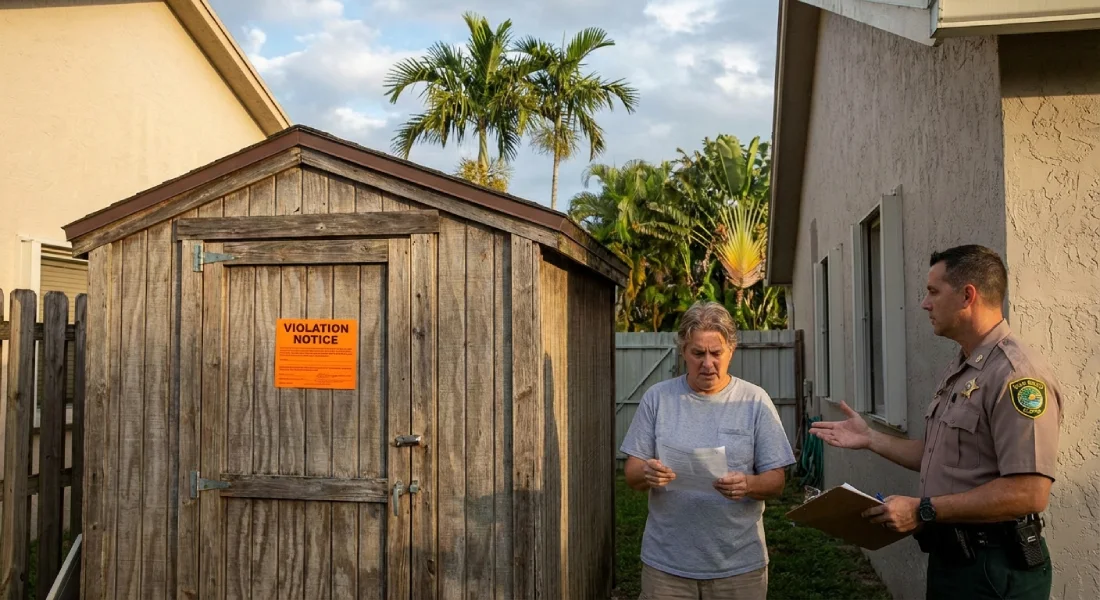
So here's what matters. If you built or installed that shed without pulling a permit, you're in violation. Period. The county doesn't care if it was already there when you bought the place or if your neighbor has three of them. What they care about is whether it's documented, inspected, and compliant. Every structure leaves a paper trail — or it should. And every violation needs a resolution, not an excuse.
Why Palm Beach County Requires Permits for Sheds
Permits aren't bureaucratic busywork. They exist because structures — even backyard ones — have to meet safety standards, zoning setbacks, and environmental guidelines. Palm Beach County enforces these rules to make sure your shed won't collapse in a hurricane, encroach on easements, or block drainage that affects your neighbors.
When you skip the permit, you're gambling that no one notices. But inspections happen. Neighbors complain. And when you try to sell your home or refinance, unpermitted structures show up like red flags on a title search. The county isn't trying to nickel-and-dime you — they're trying to keep construction building permits safe and compliant. If your shed doesn't meet code, it's a liability. And liabilities cost money.
What That Violation Notice Actually Means
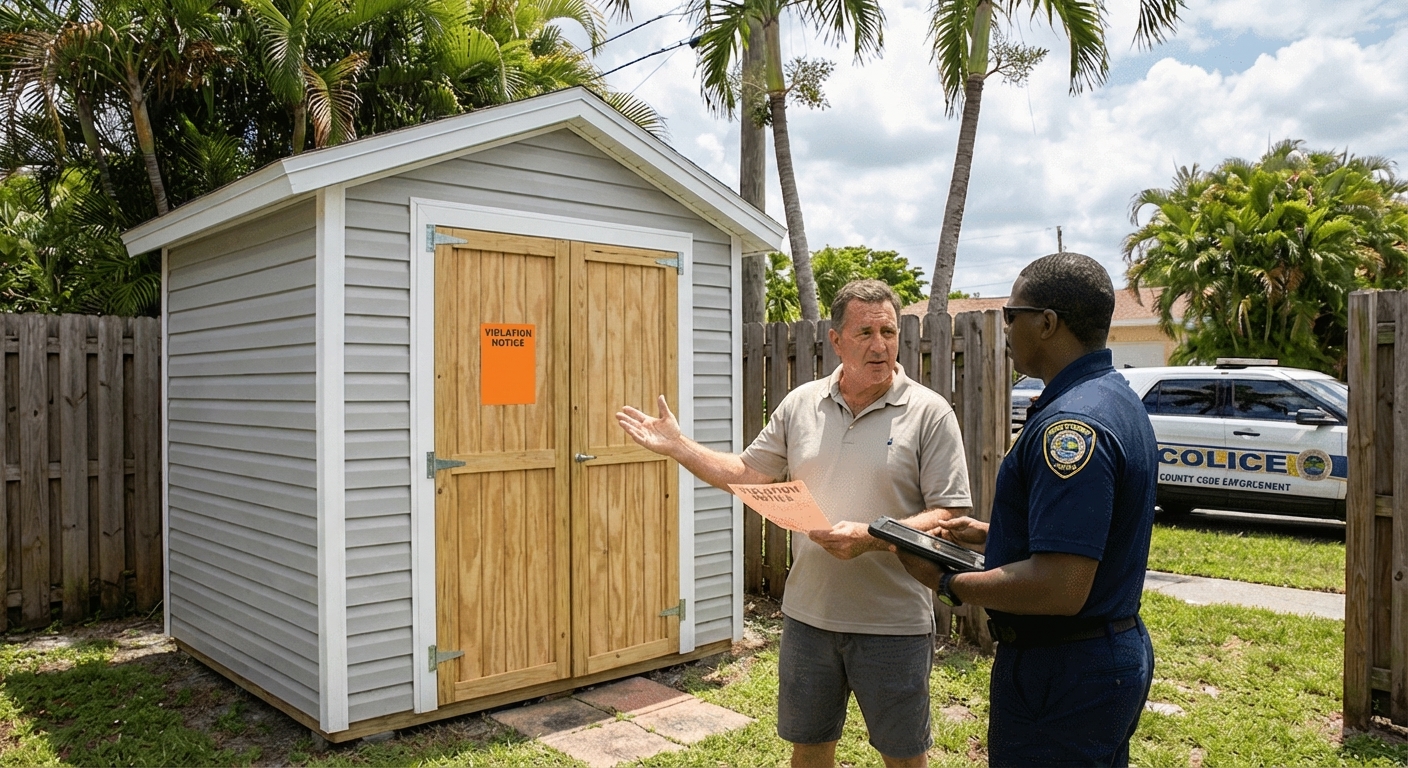
Getting a notice doesn't mean you're automatically fined into oblivion. It means the county identified a code violation and expects you to fix it. The notice will spell out what's wrong — usually lack of permit, improper placement, or both — and give you a deadline to respond.
Ignoring it is the worst move you can make. Fines escalate. Liens get filed. And if it goes far enough, the county can force removal or take legal action. Most notices give you options, and the smartest one is usually to legalize the structure by obtaining an after-the-fact permit. That means proving the shed meets code and paying the fees to make it official.
The After-the-Fact Permit Process
Legalizing an unpermitted shed isn't impossible, but it's not automatic either. You'll need to submit documentation showing the shed's location, size, and construction details. The county will review it against zoning rules and setback requirements. If everything checks out, you'll pay your fees — which are higher than standard permits because you're correcting a violation — and schedule an inspection.
Here's what you'll need to gather:
- A site plan showing the shed's exact placement and distance from property lines
- Construction details or manufacturer specs if it's a prefab unit
- Photos of the existing structure from multiple angles
- Proof of ownership and property boundaries
- Any HOA approvals if applicable
Once your application is in, the county will schedule an inspection. If the shed passes, you're clear. If it doesn't, you'll either need to make modifications or remove it entirely. There's no middle ground here.
When Your Shed Can't Be Permitted
Not every shed can be saved. If yours is too close to the property line, blocks an easement, or violates height restrictions, the county won't issue a permit. In those cases, your options narrow fast. You can relocate the shed to a compliant spot, or you can remove it. Trying to fight it without a legitimate variance or exception usually ends badly.
We've seen homeowners try to argue that the shed was already there or that it's "grandfathered in." Unless you have documentation proving it was legally permitted before current codes took effect, that argument won't hold. The county operates on records, not assumptions. If there's no permit on file, it's unpermitted. End of story.
Fees and Penalties You Should Expect
After-the-fact permits cost more than standard ones. Palm Beach County charges a penalty on top of the base permit fee, and that penalty can double or even triple your cost depending on how long the violation has existed. You'll also pay for inspections, plan reviews, and any required modifications.
Here's a rough breakdown of what you might face:
- Base permit fee based on shed size and value
- Penalty fee for unpermitted construction, often 2x the base fee
- Plan review charges if engineering or architectural drawings are required
- Inspection fees for initial and follow-up visits
- Potential fines if you miss deadlines or fail to comply
The longer you wait, the more expensive it gets. Addressing the violation immediately keeps costs manageable and prevents escalation.
How to Avoid This Mess Next Time
Prevention is cheaper than correction. Before you install any accessory structure, check with the Palm Beach County Building Division. Find out what size sheds require permits, what setbacks apply to your property, and whether your HOA has additional restrictions. Most sheds over 100 square feet need a permit, but rules vary by zoning district.
Here's how to stay compliant from the start:
- Contact the Building Division before purchasing or installing a shed
- Review your property survey to confirm setback distances
- Hire licensed contractors who understand local permitting requirements
- Keep copies of all permits, approvals, and inspection records
- Double-check HOA rules if you're in a deed-restricted community
It's not glamorous work, but it's the difference between a clean property record and a violation that haunts you at closing.
When to Bring in a Professional
If your violation involves complex zoning issues, setback variances, or engineering requirements, don't try to DIY it. A permit expediter or land-use attorney can navigate the process faster and with fewer mistakes. They know which forms to file, which departments to contact, and how to present your case if you need a variance or exception.
We've worked with homeowners who thought they could handle it themselves, only to get stuck in bureaucratic loops or miss critical deadlines. Professionals cost money upfront, but they save you time, stress, and often more money in the long run by avoiding missteps that trigger additional penalties.
Compliance Isn't Optional
That violation notice isn't going away on its own. Palm Beach County tracks these issues, and unresolved violations follow your property through sales, refinances, and even insurance claims. The sooner you address it, the cleaner your record stays. Whether that means obtaining an after-the-fact permit or removing the shed, the move you make now determines whether this becomes a minor inconvenience or a major headache. We help homeowners with property code violation assistance every day — not because we love paperwork, but because we know what happens when it's ignored. And it's never pretty.
Let's Resolve Your Shed Violation Together
Dealing with a shed violation in Palm Beach County can feel overwhelming, but you don’t have to navigate it alone. We’re here to help you cut through the red tape, avoid escalating penalties, and get your property back in the clear. If you’re ready to put this violation behind you, give us a call at 561-446-2929 or schedule a consultation and let’s get your shed squared away the right way.
‹ Back
Recent Posts
-
Real Estate Closing Delays Caused by Permit Issues in Palm Beach
September 14, 2026
-
What Should You Do About a Stop Work Order in Palm Beach?
August 31, 2026
-
How Long Does It Take to Get a Building Permit in Palm Beach?
August 17, 2026
-
Do You Need a Permit for a Shed in Palm Beach County?
August 3, 2026
-