
Septic Tank Permit Palm Beach
Installing a septic system in Palm Beach isn’t a quick weekend project. County rules shape every step, and missing a single requirement can stall your plans before you even break ground. Permits aren’t just paperwork—they’re the gatekeeper for your entire project. Without approval, nothing moves forward. That’s why every detail, from soil reports to site plans, needs to line up before you start.
How We Prepare Your Permit Application for Fast Approval
Before any application reaches the health department, we make sure every document is in order. The county expects proof that your property can safely handle a septic system, and they won’t accept assumptions. A missing survey or outdated soil test can set you back weeks. We gather everything up front, so you don’t lose time chasing paperwork.
- Property Survey: Outlines boundaries, easements, and the exact spot for your drain field, so nothing gets missed during review.
- Soil Test Results: Confirms the ground can absorb wastewater, preventing future pooling or runoff headaches.
- Site Plan: Maps out where the tank and drain field will go, showing clear distances from wells, property lines, and water features.
- System Design: Details the tank size and layout, making it clear whether you need a standard or advanced system.
- Health Department Application: Pulls all the pieces together and starts the official review process.
We coordinate with surveyors, engineers, and soil testers, making sure every piece arrives complete and on time. That means your application lands on the reviewer’s desk ready for approval, not stuck in a pile waiting for missing details.
What to Expect During Health Department Review
Once your application is submitted, the review process begins. Standard reviews usually take two to four weeks, but that timeline depends on how thorough your submission is and the department’s current workload. When documents are missing or drawings are unclear, the process stops cold. No one wants to wait for a second round of revisions.
Conventional gravity systems tend to move through review faster than advanced or engineered systems, which require extra scrutiny. During busy construction seasons, review times can stretch even longer. We focus on submitting clean, complete applications the first time, so your project doesn’t get stuck in limbo.
Coordinating Inspections and Soil Testing Without Delays
When the paperwork checks out, the next step is boots on the ground. Inspectors visit your property to confirm that what’s on paper matches reality. Soil testing, handled by licensed contractors, digs deeper—literally—checking how water drains and whether the site can support a septic system. For properties near Palm Beach, these inspections are especially important due to local groundwater conditions.
- Percolation Test: Measures how fast water moves through the soil, which determines the size and design of your drain field.
- Test Pit Evaluation: Reveals soil layers, helping inspectors spot clay, sand, or high water tables that could cause trouble later.
- Setback Verification: Ensures your system sits far enough from wells, canals, and property lines to meet county rules.
- Water Table Assessment: Identifies seasonal high water levels that could threaten your system’s reliability.
We handle the scheduling, making sure soil testers, engineers, and inspectors all get access when they need it. This keeps your permit application moving, instead of waiting for someone’s calendar to open up.
How We Resolve Setback and Soil Issues
Setback violations and soil problems are the most common reasons for permit delays. When a drain field sits too close to a well or property line, or when soil tests reveal high water tables or heavy clay, the county won’t sign off. We catch these issues early, working with engineers to redesign layouts or recommend alternative systems before you lose weeks to rejections.
Paperwork mistakes can also stall your project. Outdated surveys, missing signatures, or unclear site plans all trigger requests for corrections. We double-check every document before submission, so reviewers don’t have a reason to send your application back.
Fixing Permit Rejections and Keeping Your Project on Track
Permit rejections happen, but they don’t have to derail your timeline. When the health department flags a problem, we get to work. We adjust site plans, update system designs, or order new soil tests as needed. Each fix comes with updated drawings and calculations, and sometimes another site visit to confirm changes.
- Revised Site Plans: Adjust layouts to meet setback requirements or relocate system components as needed.
- Alternative System Designs: Engineer solutions for properties with challenging soil or high water tables.
- Additional Soil Testing: Run new tests if initial results are unclear or don’t meet county standards.
- Corrected Documentation: Update surveys, fix signatures, and clarify applications to clear up any confusion.
We communicate directly with reviewers, so corrections are targeted and efficient. This approach cuts down on back-and-forth and gets your permit back on track quickly.
Final Steps Before You Break Ground
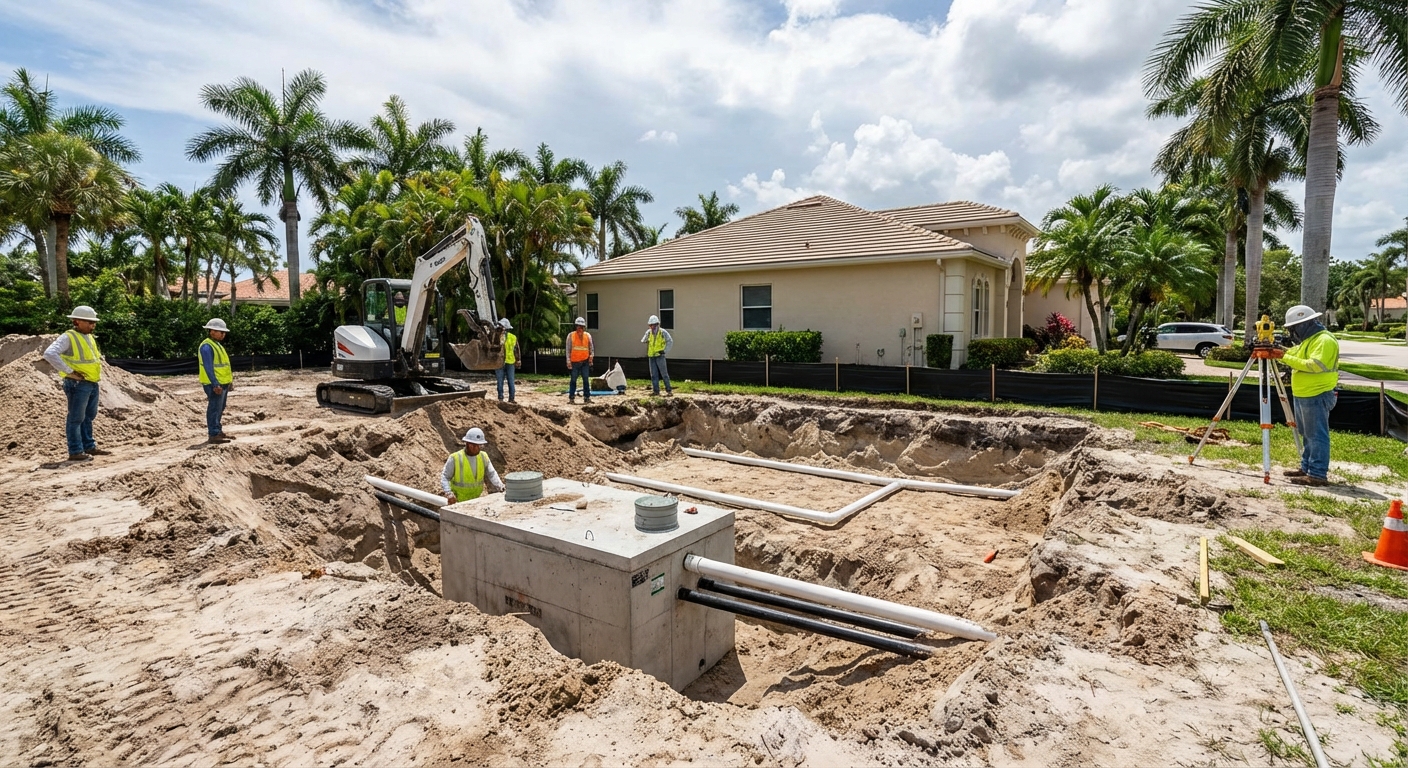
After approval, the county sets conditions for installation. A pre-installation inspection checks that excavation and tank placement match the approved plans. Even small changes can trigger a restart, so we make sure everything lines up before work begins.
Once the system is installed, a final inspection confirms every detail—from tank depth to pipe slope—meets code. Only after this sign-off can you finish grading and cover the system. Skipping inspections or making changes without approval risks fines and costly rework, so we keep every step transparent and on schedule.
Let's Get Your Septic Permit Handled
Permit delays cost time and money. Whether you're dealing with a rejection, waiting on soil tests, or just starting the application process, we'll keep things moving. Call Code Pro of the Palm Beaches at 561-446-2929 or schedule a consultation to get your septic permit approved.