Do You Need a Permit for a Shed in Palm Beach County?
Palm Beach County doesn't care if you call it a backyard shed, a storage unit, or a workshop. What matters is size, placement, and how you built it. Most property owners assume small structures fly under the radar. They don't. The county tracks construction activity, and unpermitted buildings have a way of showing up during inspections, insurance claims, or when you try to sell.
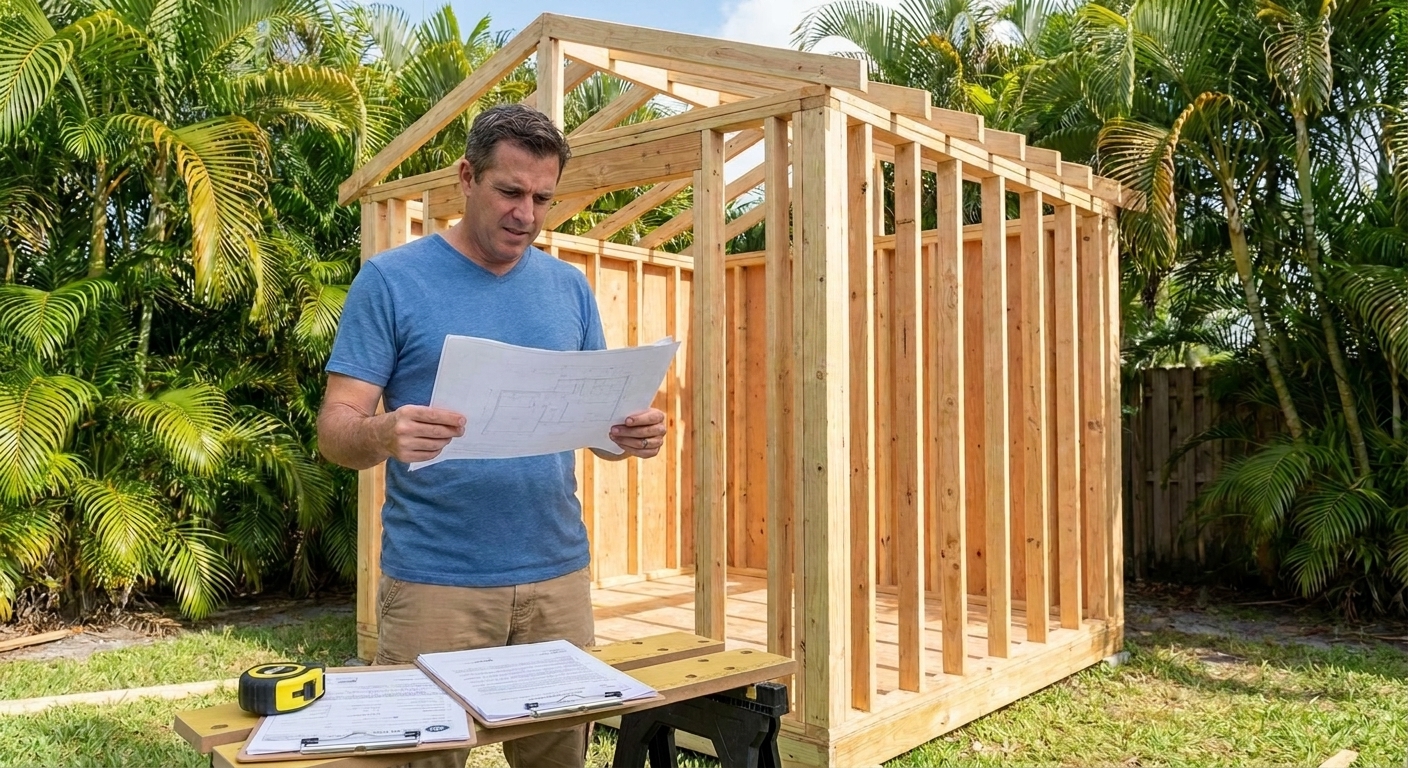
Building codes exist for a reason. Hurricane-force winds don't skip structures just because they're labeled "storage." Setback rules protect drainage, utilities, and neighbors. And if you wire it for power or anchor it to concrete, you're not just adding a shed—you're creating a permanent fixture that the county expects to meet safety standards.
Size Triggers the First Red Flag
Anything over 100 square feet usually requires a permit. That's the baseline. Cross that threshold and you're in county jurisdiction, whether the shed came as a kit or you framed it from scratch. But square footage isn't the only factor. Even smaller structures can require approval if they're tied into utilities or sitting on a permanent foundation.
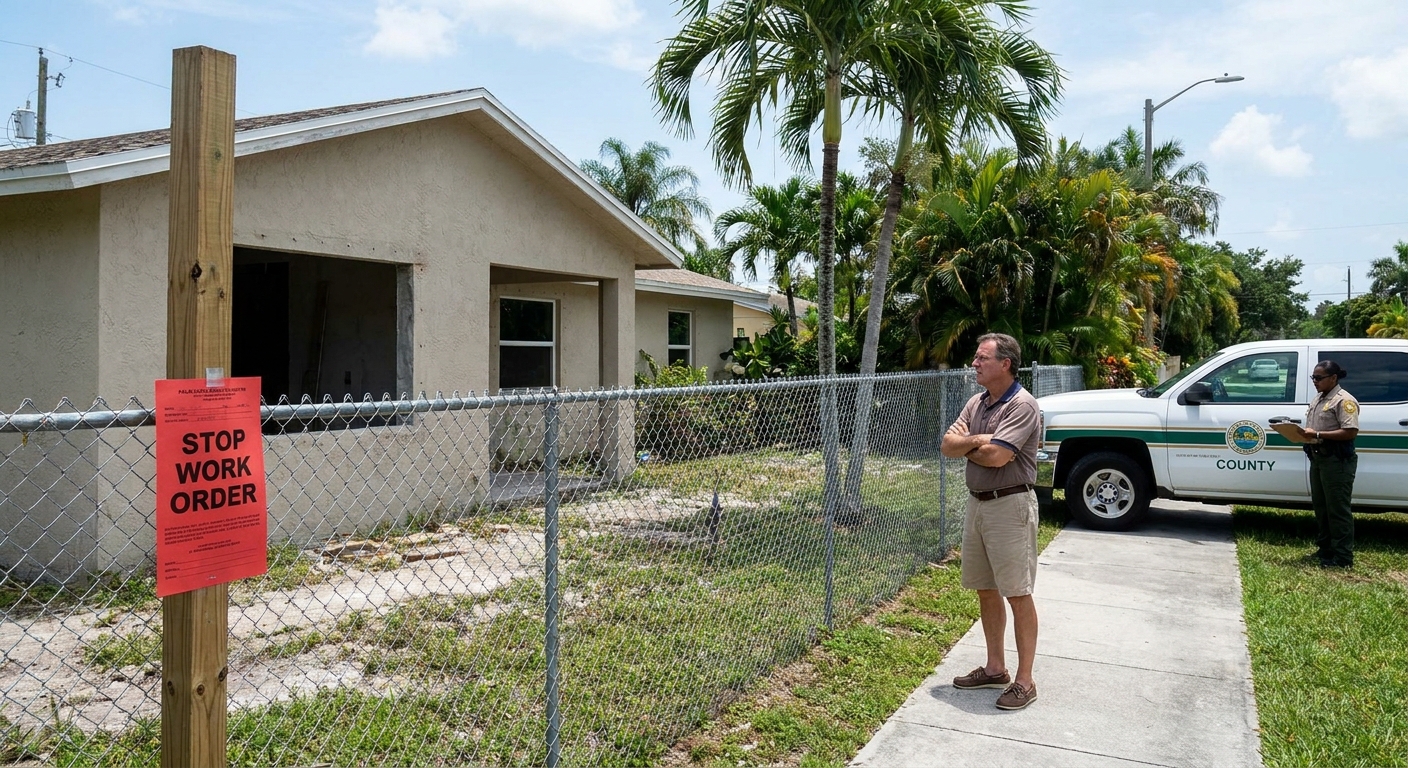
We've seen property owners get tripped up by accessory buildings that seemed harmless. A 10x12 storage shed? That's 120 square feet. A garden tool closet with electrical outlets? Now it's a permitted structure. The county doesn't issue warnings—they issue fines and stop-work orders.
What Makes a Shed Permit-Worthy
The Building Division doesn't guess. They follow clear criteria that determine whether your project needs approval. Ignore these and you're asking for trouble down the line.
- Total area exceeds 100 square feet
- Foundation involves concrete pads, footings, or anchored posts
- Electrical wiring runs to the structure
- Plumbing connects for any reason
- Use extends beyond simple storage, like workshops or hobby spaces
Even if your shed doesn't check every box, zoning rules still apply. Setbacks from property lines, height restrictions, and lot coverage limits don't vanish just because you skipped the permit.
The County Wants Proof Before You Build
Submitting for a permit means showing your work. The Building Division expects detailed plans, not sketches on napkins. You'll need measurements, materials, and a site plan that maps exactly where the shed sits relative to boundaries, easements, and existing structures.
Application forms are available online, but filling them out correctly matters. Missing information delays approvals. Incorrect dimensions trigger rejections. And once you pay the fees—which scale with project size—you're committed to seeing it through with inspections at key stages.
What the Application Process Demands
- Scaled drawings showing dimensions and construction details
- Site plan indicating placement, setbacks, and property lines
- Completed permit application with accurate project description
- Fee payment based on square footage and complexity
- Scheduled inspections after foundation, framing, and completion
Skipping steps doesn't speed things up—it creates rework. And if the inspector shows up to a half-finished shed that doesn't match the approved plans, expect delays and possibly a failed inspection.
Unpermitted Sheds Come With Consequences
Building without approval isn't a victimless shortcut. Code enforcement actively monitors construction activity, and neighbors report unpermitted work more often than you'd think. Once flagged, your options narrow fast.
The county can issue fines that compound daily. They can demand full removal of the structure. Or they'll require retroactive permits, which often cost more and involve bringing the shed up to current code—even if older standards applied when you built it. Title companies catch unpermitted structures during closings, killing deals or forcing last-minute scrambles.
When Permits Might Not Apply
Very small sheds occasionally slip through if they meet strict conditions. We're talking under 100 square feet, no permanent foundation, and zero utilities. But "no permit required" doesn't mean "no rules apply." Zoning setbacks still matter. Height limits still count. And if your homeowners association has architectural guidelines, those layer on top of county requirements.
Don't assume a prefab shed from a big-box store gets a free pass. The county doesn't care where you bought it—they care how you installed it and what you're using it for.
Clearing the Permit Hurdles Without Drama
Reaching out to the Building Division early saves headaches. Their staff can confirm whether your project needs approval before you order materials or break ground. Licensed contractors who work in Palm Beach County regularly already know the drill and can handle submissions faster than DIY filers. Building permit expediting professionals can streamline the entire process when working with construction building permits.
- Verify permit requirements with the county before purchasing materials
- Hire contractors familiar with local codes and inspection cycles
- Retain all permits, approvals, and inspection certificates permanently
- Confirm HOA restrictions and submit for architectural approval if required
- Schedule inspections promptly to avoid project delays
HOA Rules Add Another Layer
County approval isn't the finish line if you live in a deed-restricted community. Homeowners associations enforce their own standards for size, color, materials, and placement. Some ban sheds outright. Others require matching aesthetics with the main house.
Submitting to the HOA and the county simultaneously prevents doubled timelines. Waiting for county approval first, then learning your HOA rejects the design, means starting over. Coordinate both processes and keep documentation from each.
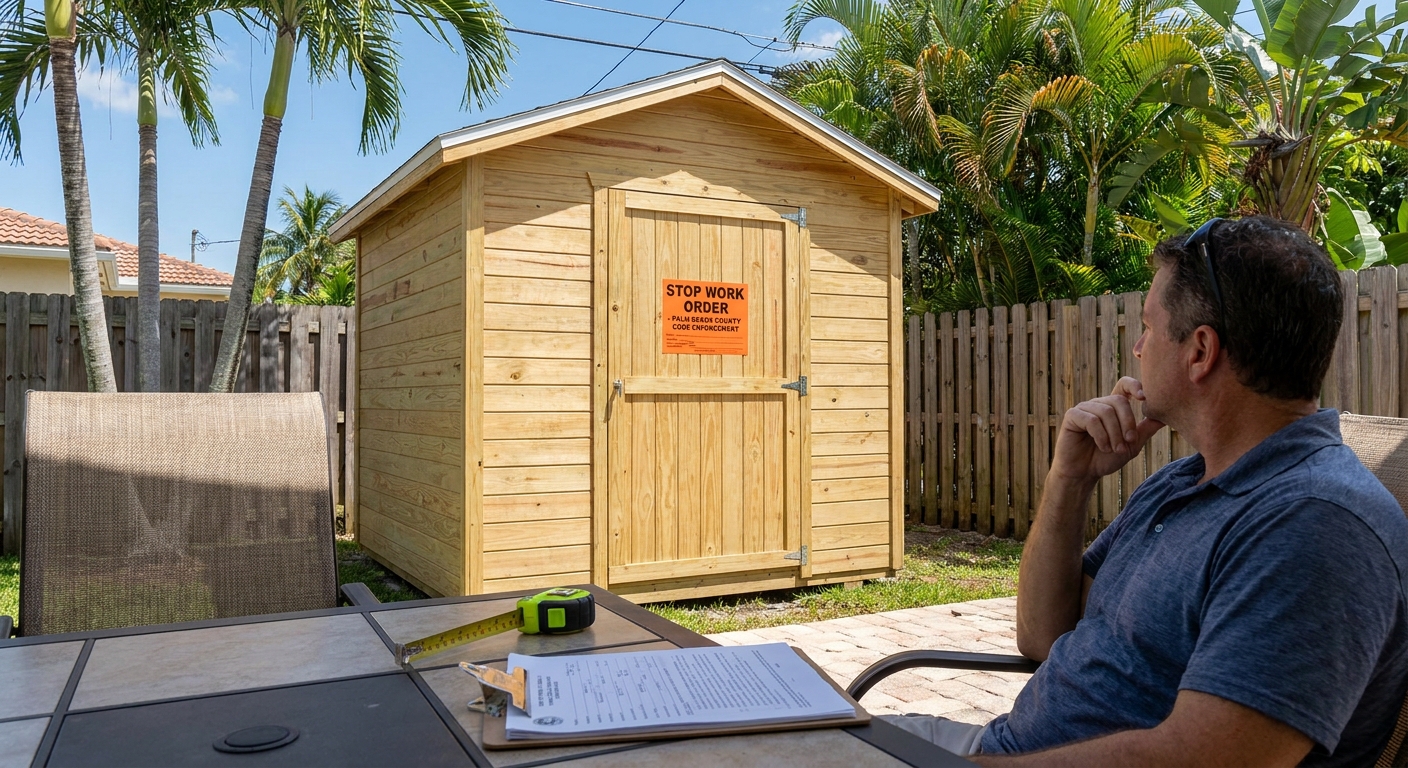
Common Mistakes That Cost Time and Money
Property owners frequently underestimate setback distances. They measure from the wrong reference point or forget about easements running along rear property lines. That puts the shed in a restricted zone, forcing relocation or variance applications.
Another misstep? Assuming "storage only" exempts electrical work. Running a single outlet still counts as wiring the structure. The county treats that as a utility connection, which triggers permit requirements regardless of square footage. And mixing personal assumptions with actual code language never ends well. Understanding electrical permit process in Palm Beach helps avoid these errors.
Why This Matters Beyond Compliance
Permitted sheds protect resale value. Buyers and lenders verify that structures meet code because unpermitted buildings carry liability. Insurance companies can deny claims if a shed damages property during a storm and wasn't built to hurricane standards. And equity-based financing often requires proof that all improvements are legal.
Cutting corners today creates exposure tomorrow. The county's building codes aren't suggestions—they're engineered responses to real risks in a region that faces tropical weather annually. A properly permitted shed withstands wind loads that obliterate unpermitted versions. Property owners dealing with unpermitted structures often face property code violation assistance requirements and may need property lien removal services.
Getting It Right From the Start
Palm Beach County's permit process isn't designed to block projects. It exists to ensure safety, protect property values, and maintain community standards. We've guided property owners through dozens of these applications, and the pattern is clear: those who engage early and document thoroughly move faster than those who guess and hope. Palm Beach County contractor permit services can ensure your shed project stays compliant from start to finish.
Don't treat permits like optional paperwork. Treat them like insurance against fines, failed inspections, and buyer objections. The few hours spent on applications and fees pale next to the cost of tearing down a finished shed or fighting code enforcement. Build smart, build legal, and keep the proof filed where you can find it years later.
Let’s Make Your Shed Project Stress-Free
Permitting doesn’t have to be a headache when we tackle it together. We know the ins and outs of Palm Beach County’s requirements and can help you avoid costly missteps from the start. If you’re ready to move forward with confidence, give us a call at 561-446-2929 or schedule a consultation so we can help you get your shed approved and built the right way.
‹ Back
Recent Posts
-
Real Estate Closing Delays Caused by Permit Issues in Palm Beach
September 14, 2026
-
What Should You Do About a Stop Work Order in Palm Beach?
August 31, 2026
-
How Long Does It Take to Get a Building Permit in Palm Beach?
August 17, 2026
-
Do You Need a Permit for a Shed in Palm Beach County?
August 3, 2026
-